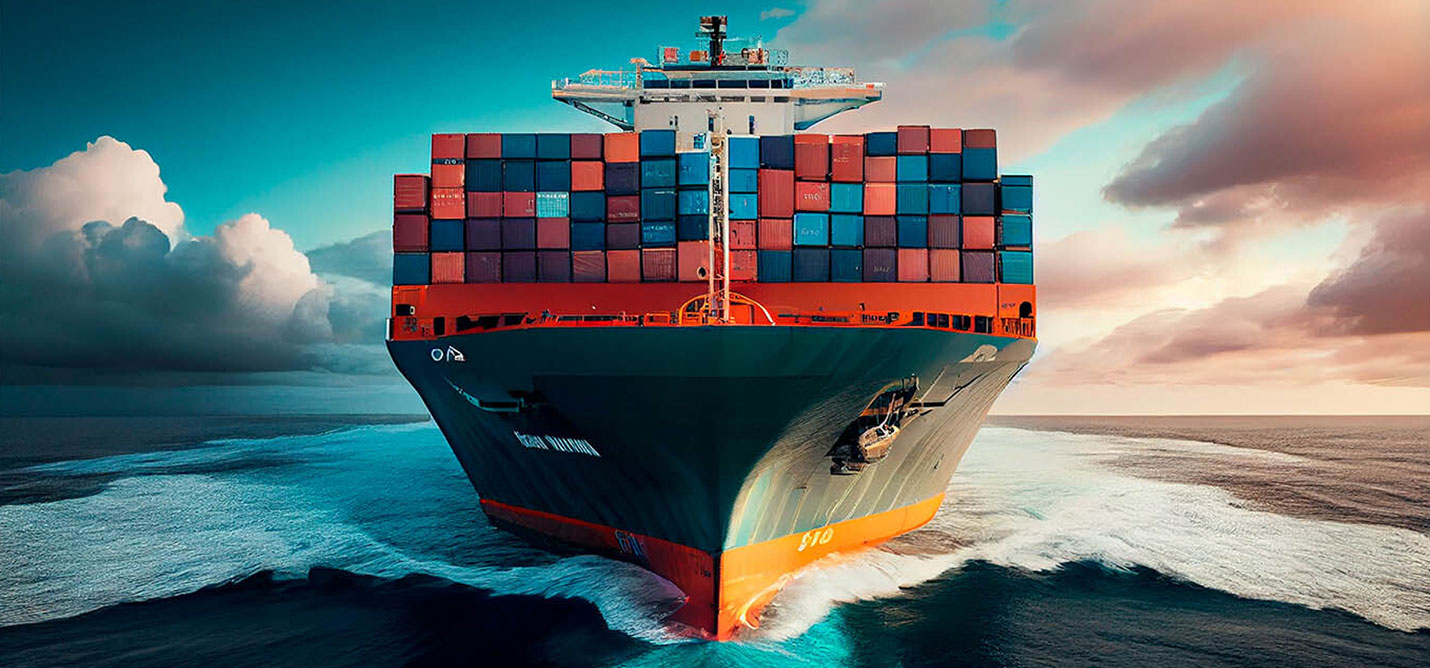
Ocean freight moves cargo in standardized containers aboard commercial vessels, following fixed sailing schedules between ports. For a business shipping to or from Egypt, the process generally involves booking container space, preparing documentation, delivering cargo to the port of origin, and arranging for pickup or delivery at the destination port. Because ocean freight runs on scheduled sailings rather than ondemand departures, planning ahead matters. Missing a booking cutoff can mean waiting for the next scheduled sailing, which may be days or weeks later depending on the route.
How Ocean Freight Works
Full Container Load (FCL) means your cargo fills an entire container, which you book exclusively for your shipment. This is generally more cost-effective for larger volumes and reduces handling, since the container isn't opened until it reaches its destination.
Less-than-Container-Load (LCL) means your cargo shares container space with other shipments. This works well for smaller volumes that don't justify a full container, though it can mean slightly longer transit times due to consolidation and deconsolidation at each end. The right choice depends on your shipment volume, budget, and how time-sensitive the cargo is. A freight forwarder can help calculate whether your specific shipment makes more sense as FCL or LCL.
Choosing the Right Egyptian Port
Egypt's main ports each serve slightly different roles in international trade:
Alexandria Port — one of Egypt's principal ports, handling a significant share of the country's containerized trade.
Port Said — positioned near the Suez Canal, relevant for shipments connecting to major east-west trade routes.
Damietta Port — another key Mediterranean gateway for container traffic.
Ain Sokhna Port — located on the Red Sea, relevant for trade routes connecting to Asia and the Gulf region.
The best port for your shipment depends on your cargo's origin or destination, the shipping lines that service each port, and your inland transportation needs once cargo clears customs.
Documentation for Ocean Freight
Ocean shipments typically require a bill of lading, commercial invoice, packing list, and any certificates specific to the cargo type (such as certificates of origin or product-specific compliance documents). Documentation needs to be accurate and complete before the shipment reaches the port — errors or missing paperwork are one of the most common causes of delays.
Transit Considerations
Ocean freight transit times vary significantly by route, and they should be planned with buffer time in mind. Port congestion, customs processing, and inland transportation to final delivery all add time beyond the vessel's sailing schedule. Building realistic timelines — rather than planning around best-case scenarios — helps avoid disruption to downstream business operations.
Common Mistakes to Avoid
Booking too close to the sailing cutoff, leaving no room for documentation issues
Underestimating the total timeline by only counting transit time, not port and customs processing
Choosing a port based on habit rather than what best suits the specific shipment
Incomplete or inconsistent documentation across different shipping documents
Not confirming customs requirements for the specific cargo type in advance
FAQ
How long does ocean freight to or from Egypt typically take? Transit times vary widely by origin, destination, and route, and should be confirmed for your specific shipment rather than assumed from general averages.
Is FCL always cheaper than LCL? Not necessarily — it depends on your cargo volume. Below a certain volume, LCL is often more costeffective; above that threshold, FCL becomes more economical.
What happens if my documentation has an error? Errors can delay customs clearance and, in some cases, incur additional costs. Reviewing documentation carefully before submission — or working with a freight forwarder who checks it for you — helps avoid this.